
Primate Safaris
Contact us
T : +256 392 159 498
T : +9 1 9544 666 665
E : info@primatesafaris.com

Primate Safaris
Contact us
T : +256 392 159 498
T : +1 (928) 607 1653
E : info@primatesafaris.com
National Park
Ngorongoro Conservation Area
About the Park
Twenty million years ago, a volcano so enormous it may have rivaled Kilimanjaro collapsed into itself. What it left behind slowly, over millennia, became one of the most extraordinary natural arenas on earth.
A caldera 260 square kilometers wide, 610 meters deep, its walls rising in a dramatic ring around a world that has been largely sealed off from the outside ever since. A world within a world. An Eden with walls.
Welcome to Ngorongoro. And welcome to the most densely packed wildlife ecosystem on the planet.
Over 25,000 large mammals live permanently on the crater floor, drawn by the rich volcanic soil, the permanent water sources, and the relative shelter of the crater walls that encourage both predator and prey to stay year-round rather than follow the migrations elsewhere.
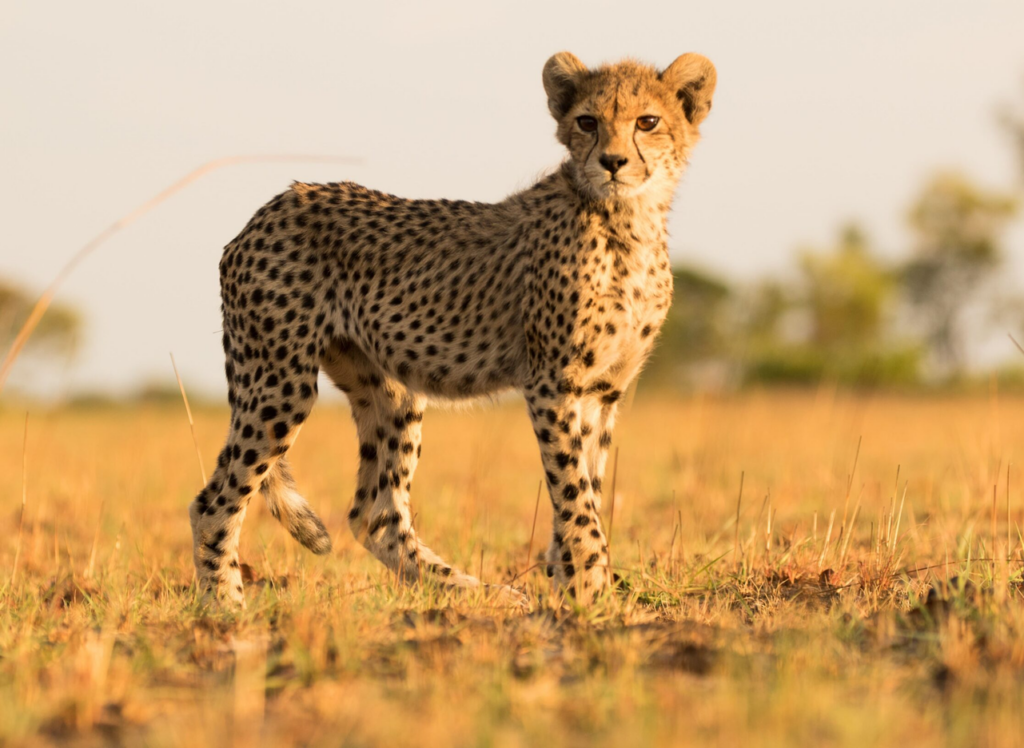 What this means for the visitor is simple and extraordinary: on a single day in Ngorongoro, you have a genuine chance of seeing the Big Five all in one game drive, and it is considered one of the only places in the world where this is consistently possible.
Lions on the open grassland. Elephants at the forest edge. Buffalo in vast herds. Leopards in the fever trees. And the black rhino is critically endangered, breeding in the wild, and thriving here in one of the last truly protected environments where they can do so.
The crater contains one of the world's highest densities of lions, which thrive on the abundant prey. These are not the wandering lions of the open Serengeti; these are resident crater lions, generations of the same families hunting the same grasslands, so accustomed to safari vehicles that an approach to within meters produces nothing more than a slow blink and a return to whatever they were doing.
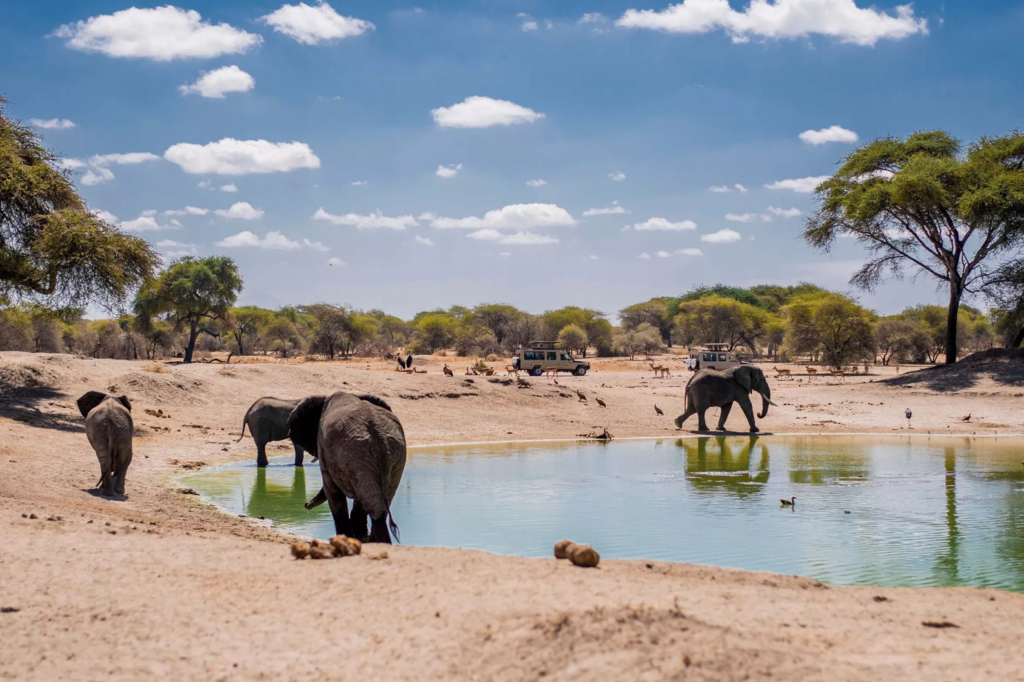 Lake Magadi sits at the crater's centre, its alkaline waters drawing thousands of flamingos in the wet season, turning the crater floor pink from the rim above. Hippos wallow in their shallows.
Spotted hyenas prowl in clans. Cheetahs sprint across the open floor. And through it all, the Maasai, whose cattle have grazed alongside the wildlife for generations, move with their herds along the crater rim trails in a scene that has been continuous for centuries.
Beyond the crater itself, the Ngorongoro Conservation Area stretches across 8,292 square kilometers of highland plains, savanna woodlands, and forest, incorporating the Olduvai Gorge, one of the most important paleoanthropological sites on earth, where the bones of our earliest human ancestors were first discovered in the 1950s.
To stand at Olduvai is to understand that the story of life in this landscape is not measured in decades or centuries but in millions of years and that everything you see moving across the crater floor today is the latest chapter in a story that began here, in this place, long before any of us had words for it.
The Ngorongoro Conservation Area spans vast expanses of highland plains, savanna, savanna woodlands, and forests, and has global importance for biodiversity conservation due to the presence of globally threatened species and the density of wildlife inhabiting the area.
The crater does not need embellishment. It does not need a superlative that has not already been applied to it. It simply needs to be experienced, descended into in the early morning mist, driven across in the golden light of a Tanzanian afternoon, and climbed out of at dusk with the particular, quiet, stunned feeling of someone who has just spent a day inside something genuinely miraculous.
Wildlife
- Lion
- Leopard
- Elephant
- Rhinoceros
- Cape Buffalo
- Cheetah
- Zebra
- Hippopotamus
- Wildebeest
- Hyena
- Warthog
- Crocodile
- Flamingo
- Ostrich
- Secretary Bird
- Vulture
- African Fish Eagle
- Hornbill
- Pelican
- Crowned Crane
- Marabou Stork
- Impala
- Gazelle
- Eland
- Waterbuck
- Hartebeest
- Baboon
- Vervet Monkey
- Aardvark
- Jackal
- Bat-eared Fox
- Porcupine
- Lilac-breasted Roller
Gallery
Swipe to browse · tap to enlarge