
Primate Safaris
Contact us
T : +256 392 159 498
T : +9 1 9544 666 665
E : info@primatesafaris.com

Primate Safaris
Contact us
T : +256 392 159 498
T : +1 (928) 607 1653
E : info@primatesafaris.com
National Park
Maasai Mara National Reserve
About the Park
Every year between July and October, the greatest wildlife spectacle on earth plays out on the plains of southwestern Kenya. The Great Wildebeest Migration over 1.5 million wildebeest, 400,000 zebra, and 200,000 antelope moving in a thundering, unstoppable mass from Tanzania's Serengeti northward into the Maasai Mara in search of fresh grass and water.
They have been making this journey for millennia. They will keep making it long after we are gone. And when they reach the Mara River, crocodile-filled, fast-moving, and terrifying, and the first wildebeest finally leaps, the whole savanna seems to hold its breath.
 No camera fully captures it. No description does it justice. You have to be there.
But here is the thing about Maasai Mara that most people discover once they arrive: the Migration is extraordinary, and the Mara is extraordinary even without it. Though the reserve covers just 0.01% of Africa's total land area, almost 40% of the continent's larger mammals are found here. That number alone tells you everything. This is one of the densest, richest, most generously stocked wildlife ecosystems on the planet, and it delivers year-round, migration or not.
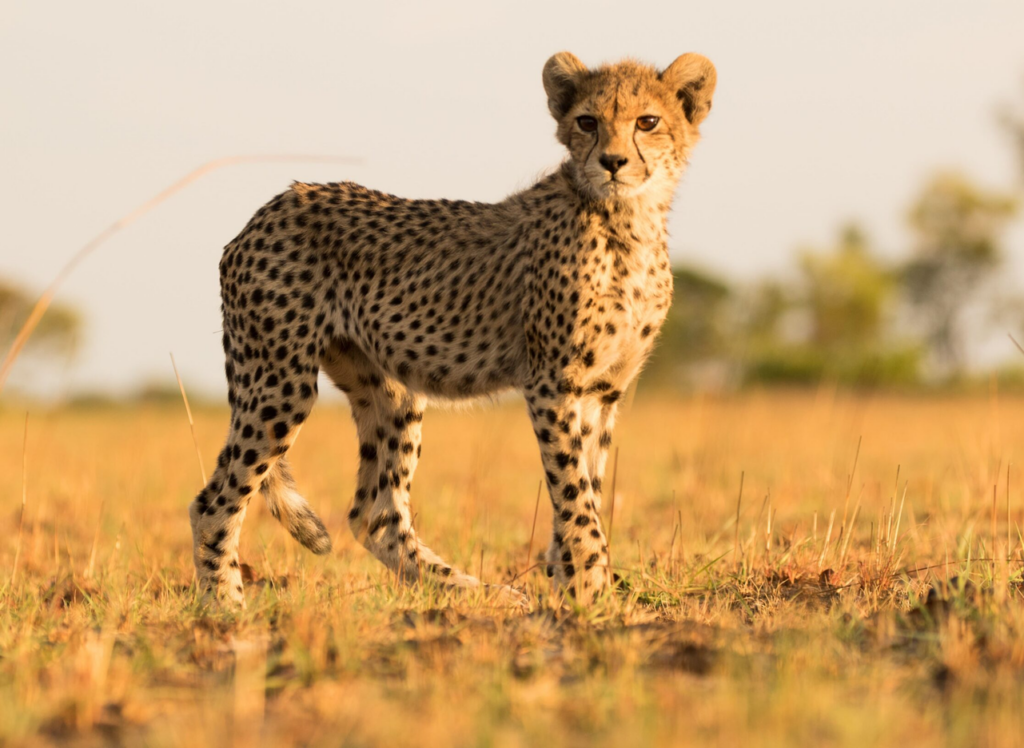
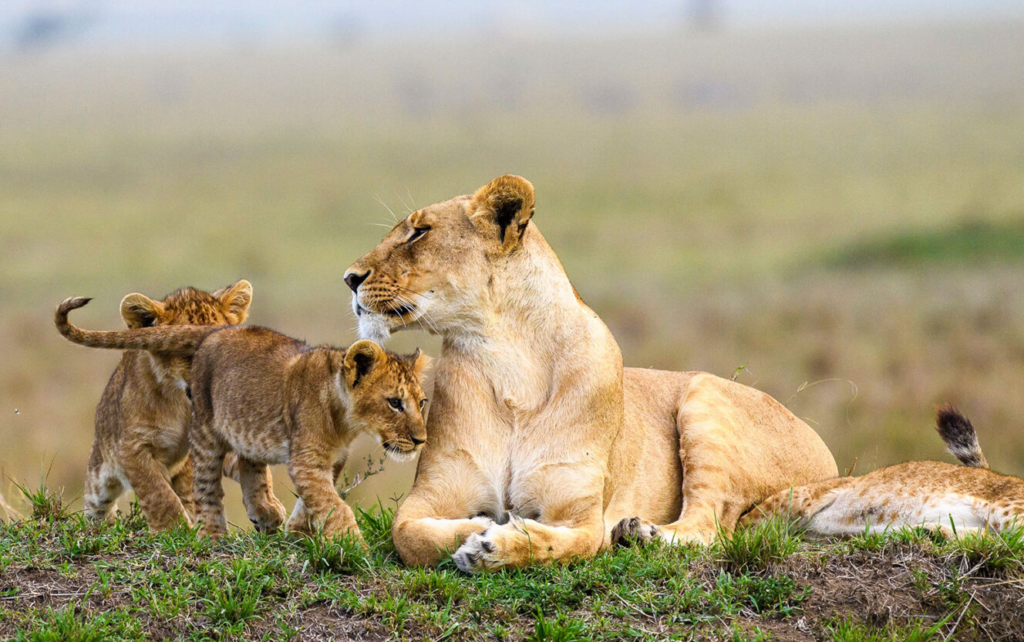
The big cats are what set the Mara apart from almost everywhere else. Between 850 and 900 lions roam the reserve and its surrounding conservancies, large prides, well-studied, and remarkably relaxed around vehicles. Cheetahs hunt the open plains of the Mara Triangle in the golden morning light, their sprints so fast and so fluid they look like something dreamed up rather than evolved.
 Leopards drape themselves over acacia branches along the river corridors, spotted and half-hidden and utterly magnificent. The Mara is one of the few places on earth where seeing all three big cats in a single day is not just possible, it is genuinely likely.
The reserve borders the Serengeti National Park in Tanzania to the south, forming one continuous, unfenced ecosystem where wildlife moves freely across an ancient landscape that has never recognized borders.
The Maasai people, the original and enduring stewards of this land, give the reserve its name and its soul. "Mara" means spotted in the Maasai language, describing the landscape of scattered trees and dappled light as seen from a distance.
A visit to a traditional Maasai village, sitting with elders around a fire as the sun drops behind the plains, adds a human dimension to the safari that lingers as long as any wildlife sighting.
With over 470 bird species, including 60 raptors, the Mara is also one of East Africa's finest birding destinations. Secretary birds stride through the grass. Lilac-breasted rollers perch on termite mounds. Martial eagles circle on thermals overhead. The birdlife alone would justify the journey.
The Maasai Mara has been voted one of the Seven Wonders of the Natural World. Stand on the open plains at dawn, the grass silver with dew, a lion pride resting on a kopje in the distance, and the horizon stretching away in every direction into pure, wild Africa, and you will understand why, without needing anyone to explain it to you.
Wildlife
- Lion
- Leopard
- Elephant
- Rhinoceros
- Cape Buffalo
- Cheetah
- Giraffe
- Zebra
- Hippopotamus
- Wildebeest
- Hyena
- African Wild Dog
- Warthog
- Crocodile
- Ostrich
- Secretary Bird
- Vulture
- African Fish Eagle
- Hornbill
- Crowned Crane
- Marabou Stork
- Impala
- Gazelle
- Eland
- Waterbuck
- Honey Badger
- Pangolin
- Jackal
- Bat-eared Fox
- Lilac-breasted Roller
- Kingfisher
- Weaver Bird
Gallery
Swipe to browse · tap to enlarge