
Primate Safaris
Contact us
T : +256 392 159 498
T : +9 1 9544 666 665
E : info@primatesafaris.com

Primate Safaris
Contact us
T : +256 392 159 498
T : +1 (928) 607 1653
E : info@primatesafaris.com
National Park
Samburu National Reserve
About the Park
Samburu National Reserve sits 320 kilometers north of Nairobi in a landscape that feels like it belongs to a different continent entirely. Rugged, sun-scorched, ancient, a semi-arid wilderness of red dust, acacia scrub, rocky hills, and endless sky where the heat shimmers on the horizon and the Ewaso Ng'iro River cuts through the dryness like a lifeline, drawing every living thing to its banks. This is not the lush, green safari of the postcards. This is something rawer, stranger, and in its own way far more compelling.
It was here that George and Joy Adamson released the famous lioness Elsa, inspiring the beloved book and film Born Free. The legacy of that story of coexistence, of wildness respected and returned, lives on in every lion that prowls these riverbanks today.
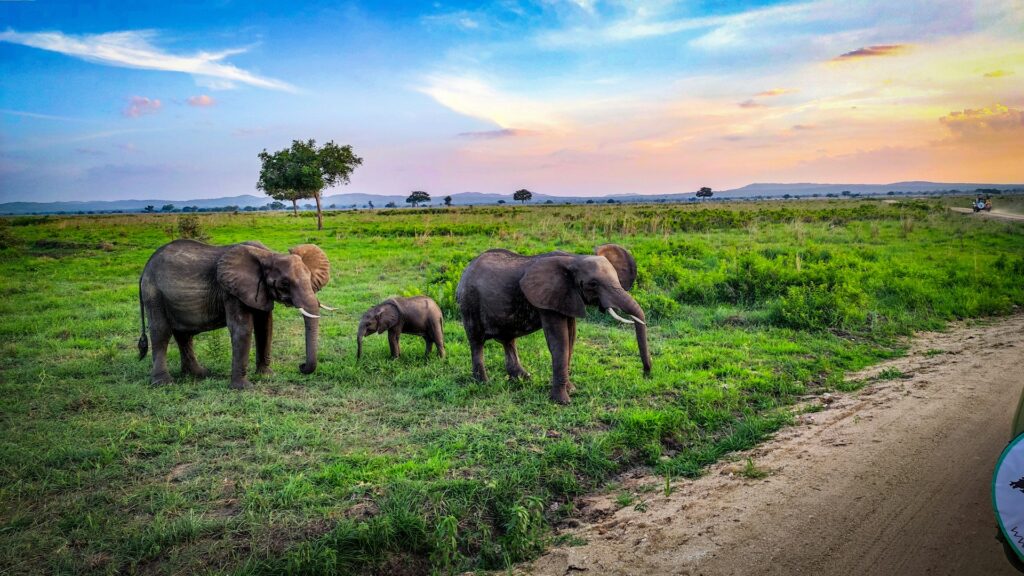 Samburu has always been a place where the relationship between humans and wildlife is taken seriously. Save the Elephants, founded by Dr. Iain Douglas-Hamilton, is headquartered inside Samburu, one of the world's most important elephant research organizations, tracking and protecting one of northern Kenya's most significant elephant populations from right here, in this reserve, in real time.
But what makes Samburu truly extraordinary, what sends wildlife lovers into a quiet, private rapture, is the Samburu Special Five. These are five dry-country species found almost nowhere else in Kenya, animals so perfectly adapted to this harsh northern landscape that they exist here and practically nowhere south of the equator.
The reticulated giraffe has the most striking coat pattern of any giraffe species. The Grevy's zebra is larger, with narrower stripes and enormous, rounded ears, and is one of the most endangered zebra species on earth. The Beisa oryx is long-horned and dignified.
The gerenuk, standing on its hind legs to reach sparse leaves with a balletic improbability that stops every first-time visitor cold. And the Somali ostrich, its blue neck flushing vivid during breeding season. Five animals. One reserve. Found almost nowhere else in Kenya.
The Ewaso Ng'iro River is the reserve's beating heart, a wide, sandy-banked waterway lined with doum palms, fig trees, and the kind of riverine forest that shelters leopards with an ease that makes Samburu one of the best places in all of Kenya for leopard sightings. Lions hunt the open plains. Cheetahs move through the scrub.
Elephants cross the river in the late afternoon, their reflections rippling in the current. Nile crocodiles wait on the sandbars with a patience that is prehistoric and absolute. Some fortunate visitors witness lions and Nile crocodiles fight over prey on the banks of the Ewaso Ng'iro, one of the most dramatic and unpredictable wildlife encounters in Africa.
Over 450 bird species fill the reserve's varied habitats, including dry-country specialists shared with Ethiopia and Somalia that cannot be found in any other Kenyan park. The vulturine guineafowl, iridescent and improbable. The golden-breasted starling is burning like a jewel in the acacia. The Somali bee-eater. Samburu is a birder's secret, and those who discover it rarely stop talking about it.
The Samburu people, warriors and pastoralists in vivid red shukas, close relatives of the Maasai, have lived alongside this wildlife for centuries. Their presence gives Samburu a cultural richness and an authenticity that deepens every safari experience.
This is their land. The wildlife is their neighbour. And walking into that relationship as a visitor, with curiosity and respect, is one of the finest things Kenya has to offer.
Wildlife
- Lion
- Leopard
- Elephant
- Cape Buffalo
- Cheetah
- Giraffe
- Zebra
- Hippopotamus
- Hyena
- Warthog
- Crocodile
- Ostrich
- Vulture
- African Fish Eagle
- Hornbill
- Marabou Stork
- Impala
- Gazelle
- Kudu
- Eland
- Oryx / Gemsbok
- Waterbuck
- Dik-dik
- Baboon
- Aardvark
- Jackal
- Lilac-breasted Roller
- Kingfisher
- Weaver Bird
Gallery
Swipe to browse · tap to enlarge