
Primate Safaris
Contact us
T : +256 392 159 498
T : +9 1 9544 666 665
E : info@primatesafaris.com

Primate Safaris
Contact us
T : +256 392 159 498
T : +1 (928) 607 1653
E : info@primatesafaris.com
National Park
Gishwati-Mukura National Park
About the Park
The 1994 genocide that tore Rwanda apart not only claimed human lives. It emptied the Gishwati and Mukura forests too, as families fleeing violence settled in the trees, cleared the land, and farmed the slopes. By the early 2000s, a forest that once stretched for hundreds of kilometers had been reduced to a fragment.
The chimpanzees that remained retreated deeper into what little was left. The birds fell silent. Through one of Africa's most ambitious reforestation and conservation programs, the Gishwati and Mukura forest blocks were restored, reconnected, legally protected, and in 2015 officially gazetted as Rwanda's fourth national park.
Today, a wildlife corridor links Gishwati Forest to Mukura Forest and down to Nyungwe Forest, a green lifeline running through the western highlands, stitching broken habitat back together one tree at a time. What you walk into when you enter Gishwati-Mukura is not just a national park. It is a resurrection.
 Small by any measure, just 34 square kilometers of forest sitting on the ridge that divides the Congo and Nile water catchment areas, Gishwati-Mukura punches quietly above its weight. The forest is dense, layered, and alive with the kind of energy that comes from a place actively healing itself. Mist rolls through the canopy in the early morning.
Over 232 bird species have been recorded in Gishwati alone, including Albertine Rift endemics and forest specialists found in very few other places on earth. The Rwenzori turaco, the regal sunbird, the purple-breasted sunbird birders who make the detour to Gishwati-Mukura rarely leave disappointed.
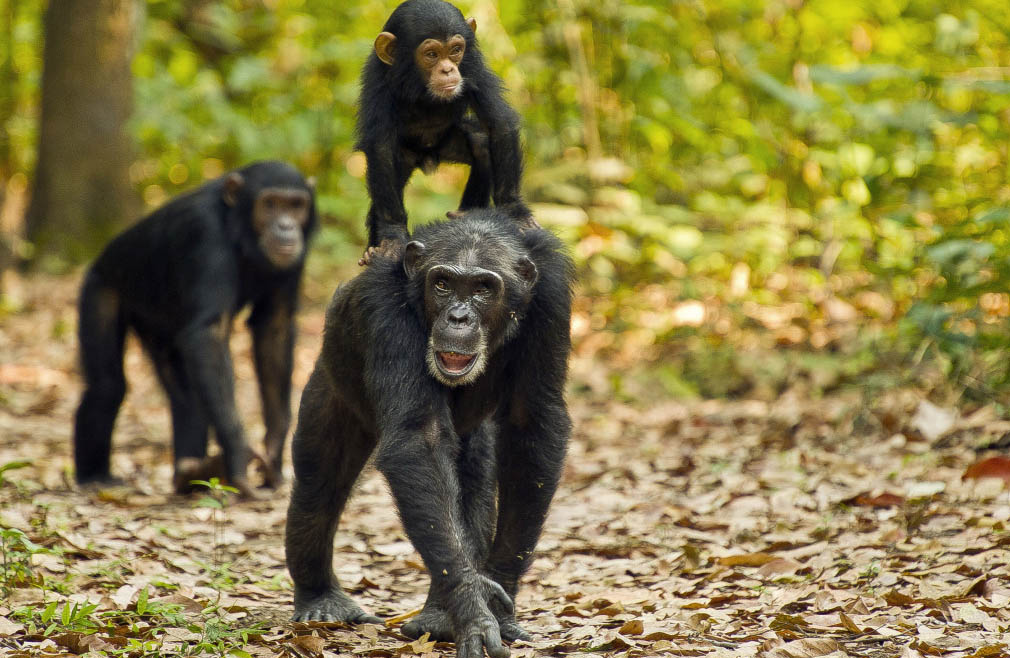
But it is the chimpanzees that draw most visitors in and the chimpanzees that make Gishwati-Mukura's story feel most personal. The park is home to a community of semi-habituated chimpanzees comfortable with trackers but still wary of strangers, meaning every visitor becomes an active part of the ongoing habituation process.
This is not a polished, guaranteed encounter. It is something rawer and, in its own way, more meaningful, a reminder that conservation is not a finished product but a living, ongoing relationship between people, wildlife, and forest. The chimps share the forest with L'Hoest's and golden monkeys, both endemic to the Albertine Rift.
The park's restoration serves as a model for sustainable conservation in Africa, demonstrating how proactive management can transform degraded ecosystems into thriving habitats. The communities surrounding Gishwati-Mukura are at the heart of that model. Former farmers who once cleared forests for survival now work as rangers, guides, and conservation partners, their relationship with the land transformed from extraction to stewardship.
Gishwati-Mukura will not overwhelm you with spectacle. It will do something quieter and more lasting. It will show you what a forest looks like when people decide, collectively and deliberately, that it deserves to survive. And it will show you that decision paying off, one chimpanzee call, one rare bird, one new sapling at a time.
Wildlife
- Chimpanzee
- Vulture
- Hornbill
- Crowned Crane
- Bushbuck
- Baboon
- Vervet Monkey
- Colobus Monkey
- Mongoose
- Hyrax
- Lilac-breasted Roller
- Kingfisher
- Weaver Bird