
Primate Safaris
Contact us
T : +256 392 159 498
T : +9 1 9544 666 665
E : info@primatesafaris.com

Primate Safaris
Contact us
T : +256 392 159 498
T : +1 (928) 607 1653
E : info@primatesafaris.com
National Park
Lake Mburo National Park
About the Park
Tucked into the rolling hills of southwestern Uganda, Lake Mburo National Park is the smallest savanna park in the country, just 260 square kilometers of acacia woodland, open grassland, rocky ridges, and glittering lakes. It does not have the dramatic scale of Murchison Falls National Park or the lion-and-elephant thunder of Queen Elizabeth National Park .
What it has is something different an intimacy. A closeness to the wildlife that makes every game drive, every walk, every boat cruise feel personal in a way that larger parks rarely manage.
 And it holds things that no other park in Uganda can offer. The impala that most elegant of antelopes, rust-coated and quick-eyed is found naturally in Uganda only here. The eland, Africa's largest antelope, moves quietly through the northern granite plateaus.
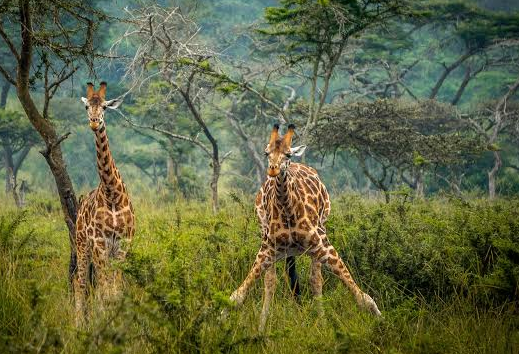
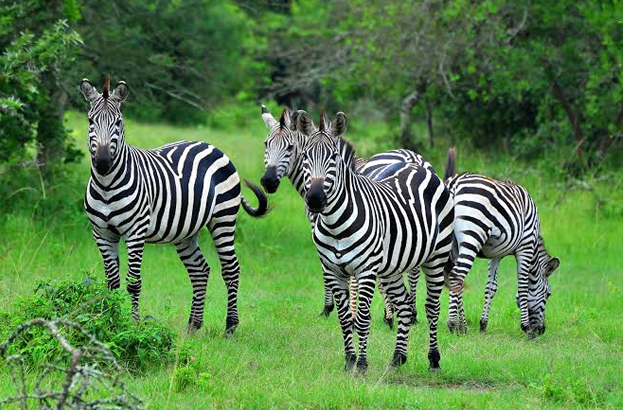
The klipspringer, sure-footed and compact, picks its way across rocky outcrops. Over 5,000 Burchell's zebra roam the grasslands the largest zebra population in Uganda their stripes catching the afternoon light in a way that never gets ordinary. Rothschild's giraffes, reintroduced in 2015, now browse the acacia stands with the unhurried grace of animals slowly reclaiming a landscape that always belonged to them.
Lake Mburo is also, quietly, Uganda's best park for leopards. Camera trap studies have confirmed a concentration of leopards here that rivals anywhere in the country, and a night drive through the woodland spotlight sweeping the darkness, guide leaning forward, everyone holding their breath is one of the most thrilling ways to spend an evening in East Africa. They are here. You just have to be patient and lucky in roughly equal measure.
 Five lakes lie within the park's borders, connected by a fifty-kilometer wetland system fed by the River Rwizi. A boat cruise on Lake Mburo at sunset is among Uganda's most serene and rewarding wildlife experiences hippos surfacing ten meters from the bow, Nile crocodiles watching from the banks, a shoebill standing impossibly still in the shallows, and the sky turning colours that no photograph ever quite captures.
Over 350 bird species have been recorded here, including rare gems like the African finfoot and papyrus yellow warbler, making it a genuinely excellent birding destination that many people discover almost by accident.
And that is perhaps Lake Mburo's greatest gift. People pass through it on their way to Bwindi Forest National Park or Queen Elizabeth, intending to spend a night and find themselves staying longer than planned. Waking up to birdsong, going out on a walking safari before breakfast, watching zebra graze from the lodge veranda with a coffee going cold in their hands. It does that to people. It slows them down in the best possible way.
Wildlife
- Cape Buffalo
- Giraffe
- Zebra
- Hippopotamus
- Warthog
- Crocodile
- Vulture
- African Fish Eagle
- Marabou Stork
- Impala
- Eland
- Topi
- Bushbuck
- Pangolin
- Aardvark
- Serval
- African Civet
- Genet
- Jackal
- Porcupine
- Shoebill
- Lilac-breasted Roller
- Weaver Bird
Gallery
Swipe to browse · tap to enlarge