
Gorilla Trekking in Uganda, Rwanda and DRC. The Complete Guide (Best Time, Permits, Rules and Everything Else)
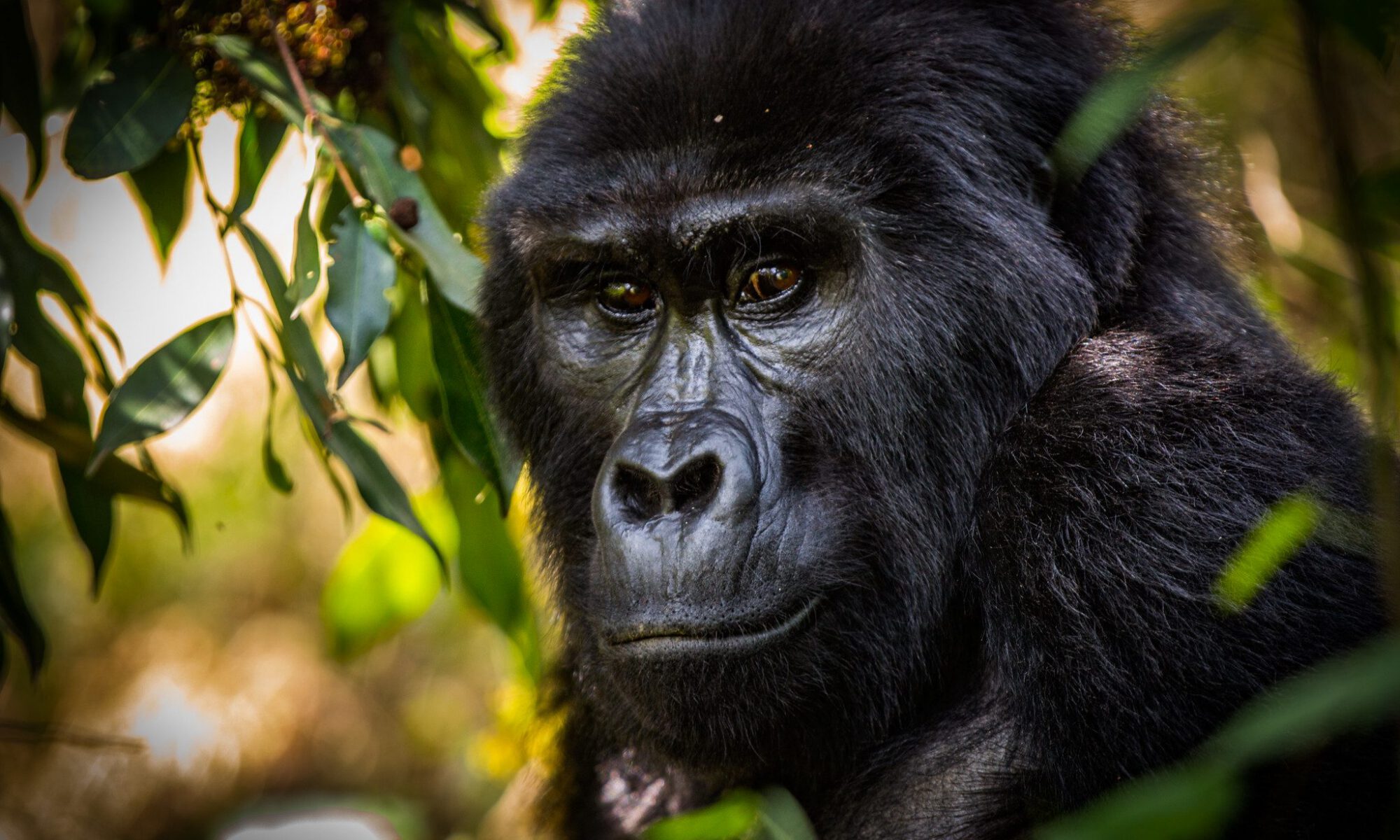
Gorilla trekking is the experience of hiking into the forest, on foot, guided by trained rangers and trackers, to spend time with a wild gorilla family that has been slowly and carefully habituated to tolerate human presence.
It is not a zoo visit and it is not staged. The gorillas live entirely wild, they roam wherever they please within the forest, and trackers go out ahead of visitors each morning to find roughly where a chosen family has settled.
Once you are led to them, you get a strictly limited window, usually one hour, to sit quietly nearby and watch them go about their day, feeding, resting, playing, a silverback occasionally beating his chest to remind everyone who is in charge. For most people who do it, it ranks among the most moving wildlife experiences there is.
There are only three countries on earth where this is possible, Uganda, Rwanda and the Democratic Republic of Congo, and all three sit within or near the Virunga Massif and the surrounding Albertine Rift forests. Each one does things slightly differently, in terms of price, rules, booking process and even which type of gorilla you are trekking. Here is everything laid out, country by country.
Special Gorilla Trekking Tours
Two different gorillas, not one
Most people assume all gorilla trekking is the same species. It is not. Uganda and Rwanda, along with Virunga National Park on the DRC side, are home to the mountain gorilla, a subspecies adapted to cooler, high altitude forest, with thicker fur and a more compact build to cope with the cold.
Fewer than 1,100 mountain gorillas exist in the wild, all of them within this single cross-border ecosystem spanning Bwindi and Mgahinga in Uganda, Volcanoes National Park in Rwanda, and Virunga in DRC.
The DRC alone also offers a second, entirely different subspecies, the eastern lowland gorilla, also called Grauer’s gorilla, found only in Kahuzi-Biega National Park in South Kivu. This is the largest of all gorilla subspecies, stockier and heavier than the mountain gorilla, living in warmer lowland and montane forest rather than the cold volcanic slopes of the Virunga range.
Neither Uganda nor Rwanda has this subspecies at all, it exists nowhere else on the planet outside eastern DRC, which makes Kahuzi-Biega a genuinely unique addition for travellers who want to see both types.
Special Africa Safaris with Primate Safaris
Africa Flying Safaris – Gorilla Trekking & Wildlife Safaris
These are special flying safaris that have been created with a certain edge that put them well above your average safari. It could be that they have a unique itinerary...
View DetailsHoneymoon Safaris: Primate watching Tours ( Gorillas & Chimps)
Getting married is such a joyful and memorable time in your life, make that both of your lives. It’s only fitting that your honeymoon should be the prime trip of...
View DetailsMountain & Lowland Gorilla Trekking
Gorilla Safaris in Rwanda, Uganda & DR Congo Coming face to face with a mountain gorilla is an unforgettable moment, even for the most jaded safari-goer. Watching these hugely powerful...
View DetailsPrimate Expeditions: Gorilla Trekking Rwanda, Uganda & Congo
Primate Safaris offers Luxury Primate expeditions and adventures to Rwanda, Uganda, and Congo with the theme of Primate Watching in the Magical Wild of pure tropical forests, staying in top-notch luxury accommodations close to...
View DetailsThe Great Migration Adventures
Wildebeest Migration in Kenya & Tanzania When it comes to the wildebeest migration it’s hard to conceive the scale of the event. This underrated wildlife species shows its true tenacity,...
View DetailsBest time to trek across all three countries
The pattern is broadly the same everywhere in this part of Africa, since Uganda, Rwanda and DRC’s gorilla parks all sit within a similar climate band. Two dry stretches, June to September and December to February, offer firmer trails and generally easier hiking.
The wetter months, March to May and October to November, bring more rain and muddier paths, but the forest stays trekable throughout, showers tend to be short and heavy rather than lasting all day, and this is when trekking is quieter and, in Uganda’s case, meaningfully cheaper.
Gorillas themselves do not move in and out of these forests seasonally, so trekking runs year round in all three countries, it is really trail conditions and crowd levels that shift with the seasons, not your chances of finding a family.
Recommended Safari Lodges
Amakoro Songa Lodge
The spacious luxury cottages at Amakoro blend rustic elegance with modern comfort. Each room features locally crafted decor and a cozy fireplace, a large bed, a sitting area with chairs,...
View DetailsAmarembo Gorilla by Touch down
These cozy, rustic rooms are specifically designed for the cool evenings of the Virunga region, featuring fireplaces and bedding tailored to colder nights. These feature Free Internet; Parking; Bar or...
View DetailsAmboseli Sopa Lodge
83 rooms, featuring 40 twin rooms with two queen-size beds, 22 rooms with a single queen-size bed, and 21 rooms with a king-size bed, 1 honeymoon suite, 6 inter-connecting rooms...
View DetailsAnabezi Luxury Tented Camp
Anabezi Camp in the Lower Zambezi National Park, Zambia, features 12 luxury tented suites. This includes 11 standard luxury tents and 1 larger luxury family suite. Each room is built...
View DetailsApoka Safari Lodge
10 expansive, canvas-walled chalets (6 doubles and 4 twins). Each standalone cottage is built on stilts and includes an en-suite bathroom, private veranda, and a hand-hewn stone outdoor bathtub designed...
View DetailsAshnil Mara Camp
30 luxury tents set within the Masai Mara National Reserve and close to the legendary Mara River. They feature Private Bathroom, Free wifi, Shower, Free toiletries, Deluxe Room.
View DetailsBisate Lodge Rwanda
Each heated villa includes a bedroom, reception area, en-suite bathroom, central fireplace, and private deck with views, king-size bed, Lounge/Reception area, two armchairs, a sofa, a small desk on a...
View DetailsBuhoma Lodge
Buhoma Lodge features a total of 10 chalet-style rooms, which are set above the main building on the edge of Bwindi Impenetrable National Park. Out of these 10 chalets, nine...
View DetailsBukima Tented Camp
Bukima Tented Camp in the Democratic Republic of Congo (DRC) offers a rustic, mid-range Meru-style safari tent experience. Originally built for researchers, it blends canvas-and-wooden base comfort with the charm...
View DetailsBunyonyi Overland Resort
Every room at the resort includes a terrace with a lake view, while selected rooms come with a balcony. All rooms have a wardrobe and clothes rack. Most rooms include...
View DetailsBwindi Silverback Lodge
12 elevated, forest-facing rooms ("Nests") with king or twin beds, private stone patios or balconies with sunken heated plunge pools, and en-suite bathrooms. They feature small, private circular heated stone...
View DetailsCamp Xakanaxa
24 guests across 11 twin/double standard tents and 1 spacious two-bedroom family tent with en-suite facilities and private viewing decks, open-plan lounge area, bathrooms/ showers, hand basins, flush toilets, eco-friendly...
View DetailsComparison of Gorilla Trekking in Africa
Uganda: the most affordable mountain gorilla option
Uganda holds more than half of the world’s mountain gorilla population, split between Bwindi Impenetrable Forest and the smaller Mgahinga Gorilla National Park. A standard permit costs around 800 US dollars for foreign non-residents, 1500 US dollar for Habituation, Foreign Residents pay 700 US dollar and East African pay UGX 300,000. The catch with the discounted permits is that they cannot be rescheduled once booked, so they only make sense if your travel dates are firmly fixed.
Standard permits can be rescheduled, generally if requested 91 or more days ahead of the original date, with a fee of around 20 to 25 percent of the permit cost.
Late penalty of 25% will apply once the reschedule is done in late time of trekking. So if the permit is less than five days to trekking dates, you are required to pay a late penalty of 25% to the Uganda Wildlife Authority.
Booking now has to go through a licensed Ugandan tour operator rather than directly with the Uganda Wildlife Authority, and full payment is required upfront, the old system of holding a permit for a week without paying no longer exists.
Bwindi is split into four sectors, Buhoma in the north with the gentlest trails and the longest track record, Ruhija in the east at higher altitude and popular with birders, Rushaga in the south with the largest number of families and the only sector offering the Gorilla Habituation Experience, and Nkuringo, also in the south, known for tougher terrain and dramatic scenery.
Mgahinga, in the far southwest near the Rwanda and DRC borders, has a single habituated family, the Nyakagezi group, and offers a quieter alternative away from Bwindi’s crowds.
Uganda’s habituation experience allows up to four hours with a semi-habituated family instead of the standard hour, currently priced around 1,500 US dollars, with only eight permits released daily and available exclusively in Rushaga.
Rwanda: the premium, most polished option
Rwanda’s Volcanoes National Park is the country’s only gorilla trekking destination, home to twelve habituated families and roughly 96 permits released daily. The permit costs 1,500 US dollars per person, close to double Uganda’s rate, and this pays for what is generally the shortest and most manageable trekking experience of the three countries, along with excellent infrastructure and some of the finest lodges in the region right on the park’s doorstep.
Rwanda does offer discounted pricing too, around 1,050 US dollars if combined with at least two nights in Akagera or Nyungwe National Park during the November to May low season, along with separate, heavily subsidised rates for East African and other African citizens.
Rescheduling in Rwanda is possible but comes with its own rules, generally allowed once, with at least 14 to 30 days notice depending on the operator and circumstances, and a fee of around 20 percent of the permit cost.
Permits are officially non-refundable outside of a few exceptions, most notably if rangers carry out a full search and genuinely cannot locate any gorilla family that day, in which case a full refund or reschedule is provided.
Booking runs through the Rwanda Development Board directly or through a licensed operator, and given that only 96 slots exist per day across the whole park, booking three to six months ahead for peak season is strongly advised.
DRC: the cheapest permits, but check the safety situation first
The Democratic Republic of Congo offers by far the lowest permit prices of the three, generally 400 to 450 US dollars, and it is also the only country where both gorilla subspecies exist.
Mountain gorillas are found in Virunga National Park, Africa’s oldest national park, while eastern lowland gorillas are trekked separately at Kahuzi-Biega, several hundred kilometres to the south in South Sudan and South Kivu provinces.
Here is the part that genuinely matters before booking anything in DRC. Virunga National Park has been closed to tourism since the M23 armed group took control of Goma in 2025, and as of mid-2026 it remains closed, with no reliable timeline for reopening given ongoing instability in North Kivu province.
Kahuzi-Biega, further south, has generally continued operating under strict security protocols, including armed ranger escorts, but North and South Kivu as a whole are rated a Level 4, do not travel, advisory by several Western governments due to active conflict and limited emergency support in the region.
If DRC gorilla trekking appeals to you because of the lower price or the chance to see eastern lowland gorillas, treat this as a decision that needs an up to date safety check with a specialist operator and your own government’s current travel advisory, not something to book purely off older blog posts or outdated pricing pages, since the situation on the ground has shifted significantly in the past two years and can shift again with little warning.
Booking, permits and rescheduling, side by side
Across all three countries, the permit itself is the single item you must have before setting foot in the forest, it covers park entry, your ranger guide, and a conservation contribution that funds anti-poaching patrols and community programmes around each park.
Uganda’s system now requires upfront payment through a licensed operator with no soft holds. Rwanda allows booking directly through the Rwanda Development Board or through operators, with one reschedule generally permitted subject to notice and a fee.
DRC pricing and booking availability shifts more than the other two given the security situation, so working with an operator who can confirm current, real time access is essential rather than optional.
In every country, if you fall sick before your trek, say so. Do not push through a cold or flu hoping nobody notices at the briefing. Gorillas share the vast majority of their DNA with humans and can catch human respiratory illnesses easily, and an outbreak within a habituated family can be genuinely fatal to them given how closely they live together.
What the rules look like once you’re in the forest
The core rules are essentially identical across Uganda, Rwanda and DRC, since all three countries are protecting the same handful of remaining gorilla populations and coordinate on conservation standards.
Groups are capped at eight visitors per family per day. Once found, you get a strict one hour with them. A minimum distance, generally cited as somewhere between 7 and 10 metres depending on the specific park’s current guidance, must be kept at all times, though a curious young gorilla wandering closer on its own is not unheard of, in which case rangers will calmly have you crouch, look down and stay still rather than back away suddenly.
Touching a gorilla, even one that approaches you, is never allowed. Flash photography is banned.
Voices stay low, movements stay slow, and eating, drinking or smoking near the gorillas is not permitted. Minimum age for trekking is 15 in all three countries, no exceptions.
Which one should you choose?
If budget matters most and you want the shortest odds of disruption, Uganda offers the best balance, the lowest priced mountain gorilla permit of the two stable, easily accessible countries, four separate sectors for flexibility, and now a genuine low season discount if your dates allow it.
If a shorter, smoother trek and top tier infrastructure matter more than price, Rwanda delivers that, at close to double the cost. If your interest is specifically the rarer eastern lowland gorilla, or you are simply chasing the lowest possible permit price and are comfortable working closely with a specialist operator to navigate the current security picture, DRC’s Kahuzi-Biega is worth researching, while Virunga itself should be treated as closed until credible, current reporting says otherwise.
Many travellers end up combining two of the three, most commonly Uganda and Rwanda, since the border crossing between them is straightforward and a combined trip lets you compare both experiences, or add Uganda’s chimpanzee trekking in Kibale into the same itinerary.
However you choose to do it, book early, confirm current pricing and rules with your operator close to your travel date rather than relying on older information, and go in understanding that you are one of a very small number of people on earth who will ever get to do this.